NCIRE Investigators
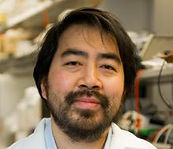
Franklin W. Huang
MD, PhD
Assistant Professor, Department of Medicine, UCSF
Dr. Franklin Huang is a medical oncologist who cares for patients with prostate cancer.
Huang's lab examines genetic differences between cancer cells and normal tissue, aiming to determine what makes certain tumors more aggressive. His work seeks to understand prostate cancer in African Americans and to develop better treatments. His other areas of study include finding new drug targets for cancer patients with precision medicine (an approach that individualizes treatment by considering factors such as genetics and environment) and global oncology (a field focused on expanding access to cancer prevention and treatment). His research receives support from the National Institutes of Health, the United States Department of Defense, the Prostate Cancer Foundation and the Benioff Initiative for Prostate Cancer Research.
Huang earned his doctorate in genetics from Harvard Medical School and his medical degree from Washington University School of Medicine in St. Louis. He completed a residency in internal medicine at Massachusetts General Hospital and a fellowship in hematology and oncology at Dana-Farber Cancer Institute; both hospitals are Harvard affiliates. He is a co-founder of Global Oncology, a nonprofit working to improve cancer care for underserved patients around the world.

Gary Jarvis
PhD
Senior Research Career Scientist, Laboratory Medicine Service, SFVAHCS
Adjunct Professor of Laboratory Medicine, UCSF
Dr. Jarvis's research program is focused on investigating questions of innate immunity in three experimental systems: (1) studying innate immune responses to gonococcal and chlamydial infection, (2) examining questions of the structure and function of endotoxin, and (3) looking at endotoxin as a potential therapeutic for acute traumatic brain injury.

Gerald Hsu
MD, PhD
UCSF Division of Hematology/Oncology Fellowship Program Director; Associate Clinical Professor of Medicine, UCSF
Dr. Hsu is the Hematology/Oncology Fellowship Program Director in the at UCSF. He grew up in Edmonton, Canada and the San Francisco Bay Area. After completing his medical and graduate degree in Biochemistry at Duke University and residency at Brigham & Women’s Hospital, Dr. Hsu made his way back to the Bay Area for fellowship in medical oncology at UCSF. Dr. Hsu practices at the San Francisco VA Medical Center with a particular interest in hematologic malignancies. He has been involved with curriculum development and educational initiatives at the medical school and post-graduate level at UCSF and is a member of the UCSF Haile T. Debas Academy of Medical Educators.

Hubert T. Kim
MD, PhD
Staff Physician, Surgical Service and Chief of Orthopedic Surgery, SFVAHCS
Associate Professor of Orthopedic Surgery, UCSF
Dr. Kim was the first researcher to report an association between fractures of the knee joint and a form of programmed cell death known as apoptosis. A second research front in Dr. Kim's lab is of critical importance to Veterans: repairing nerve damage from bullet and bomb wounds, which frequently cause long-term functional damage to injured limbs when damaged nerve segments grow back improperly or not at all. This research could result in repair methods that are superior to current conventional techniques.

Irina Strigo
PhD
Professor, Psychiatry, Weill Institute for Neurosciences, UCSF
Irina Strigo, Ph.D. is Professor in the Department of Psychiatry at UCSF and Research Biologist at the U.S. Department of Veterans Affairs. She received her research training from Columbia University (Radiology), Barrow Neurological Institute (Neurosurgery) and UC San Diego (Psychiatry). She received her Ph.D. and B.Sc. in Physiology from McGill University, Montreal, Canada.
Our group investigates brain networks that process pain and emotion in individuals with depressive, anxiety disorders, chronic pain and traumatic brain injury. In addition, we seek to understand how individual differences in pain response relate to pain chronification. This research has been funded by the National Alliance for Research in Schizophrenia and Depression (NARSAD), National Institute of Health (NIH), the U.S. Department of Veterans Affairs and Painless Research Foundation.